What is the difference between spray foam insulation and a gap filler?
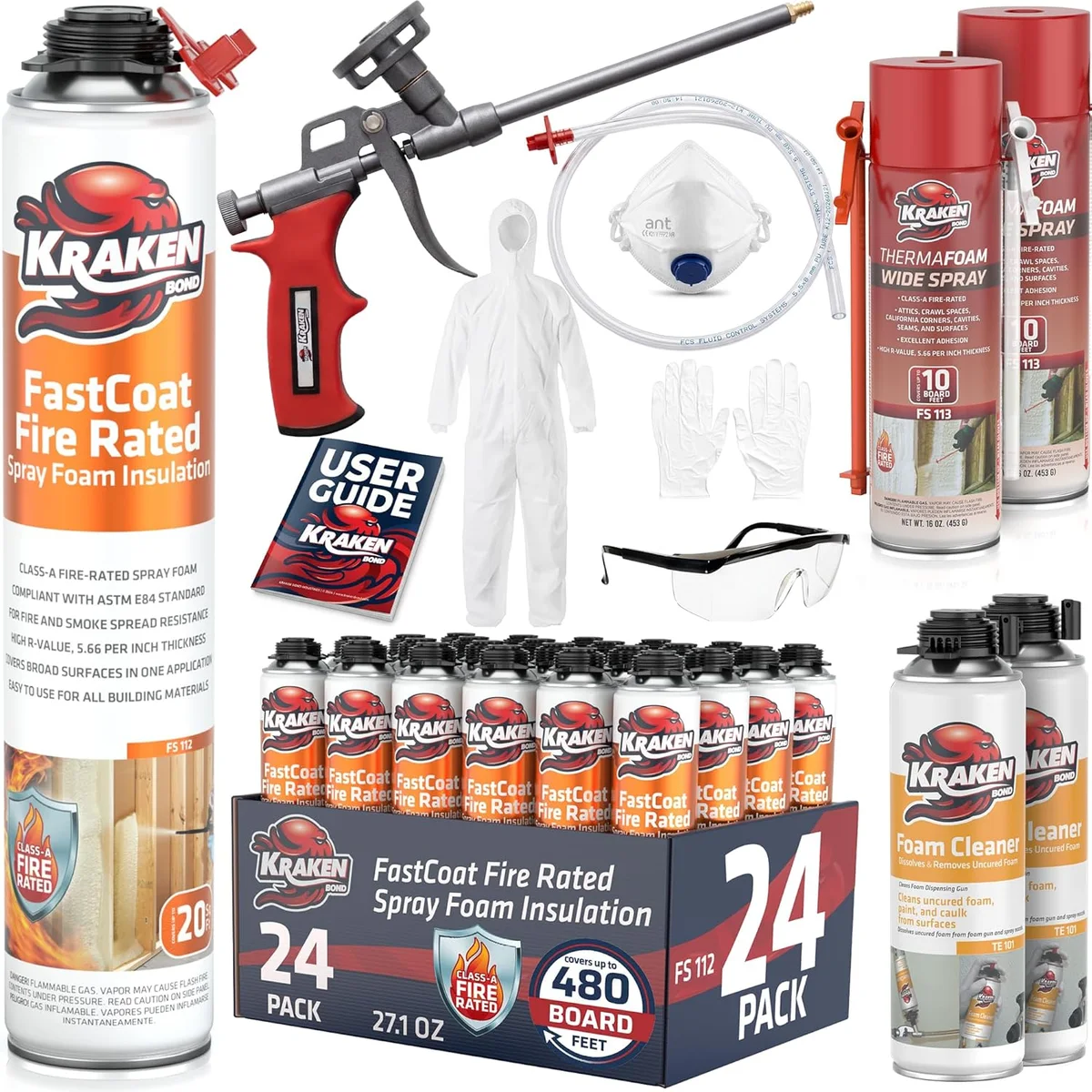
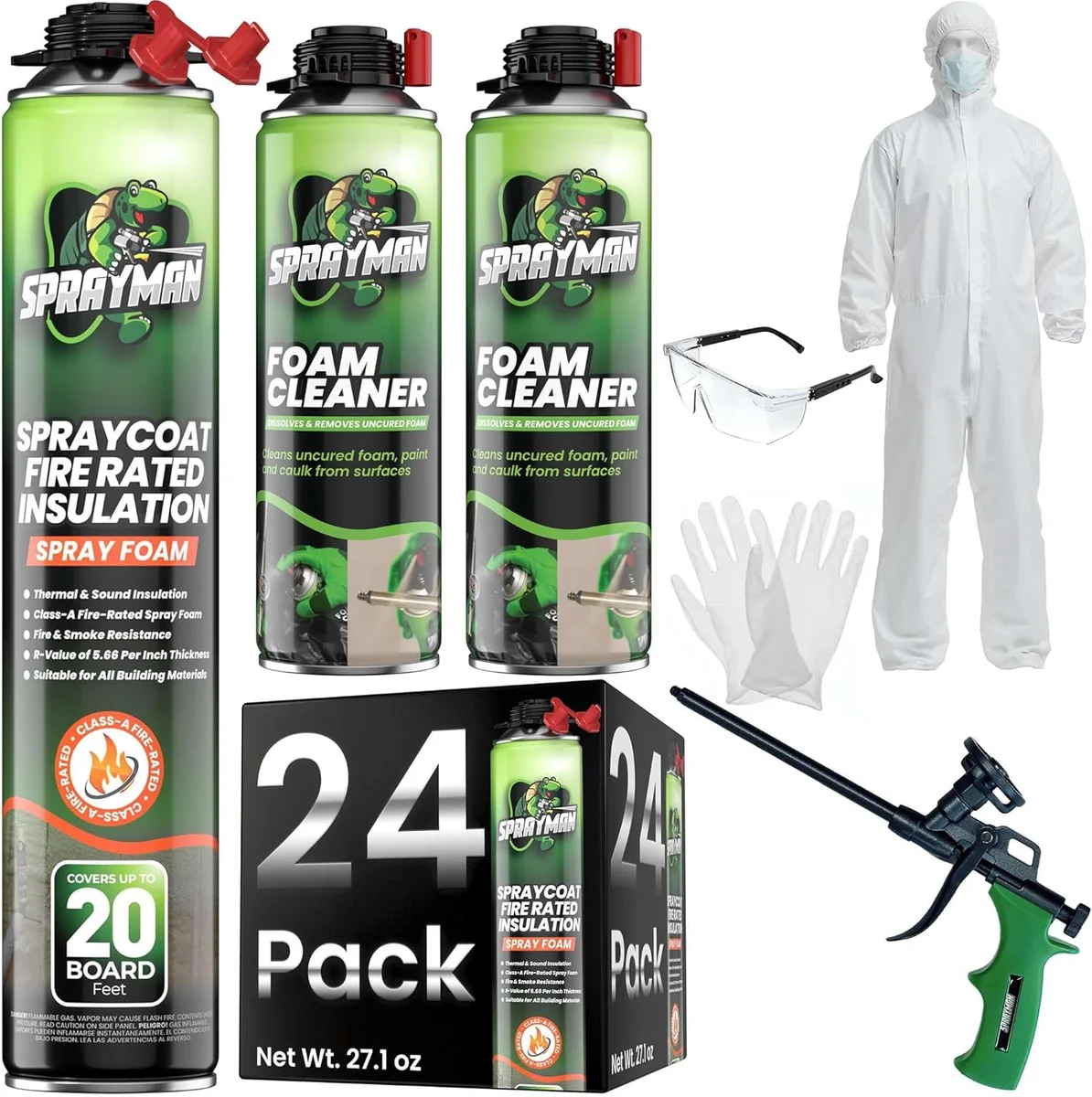
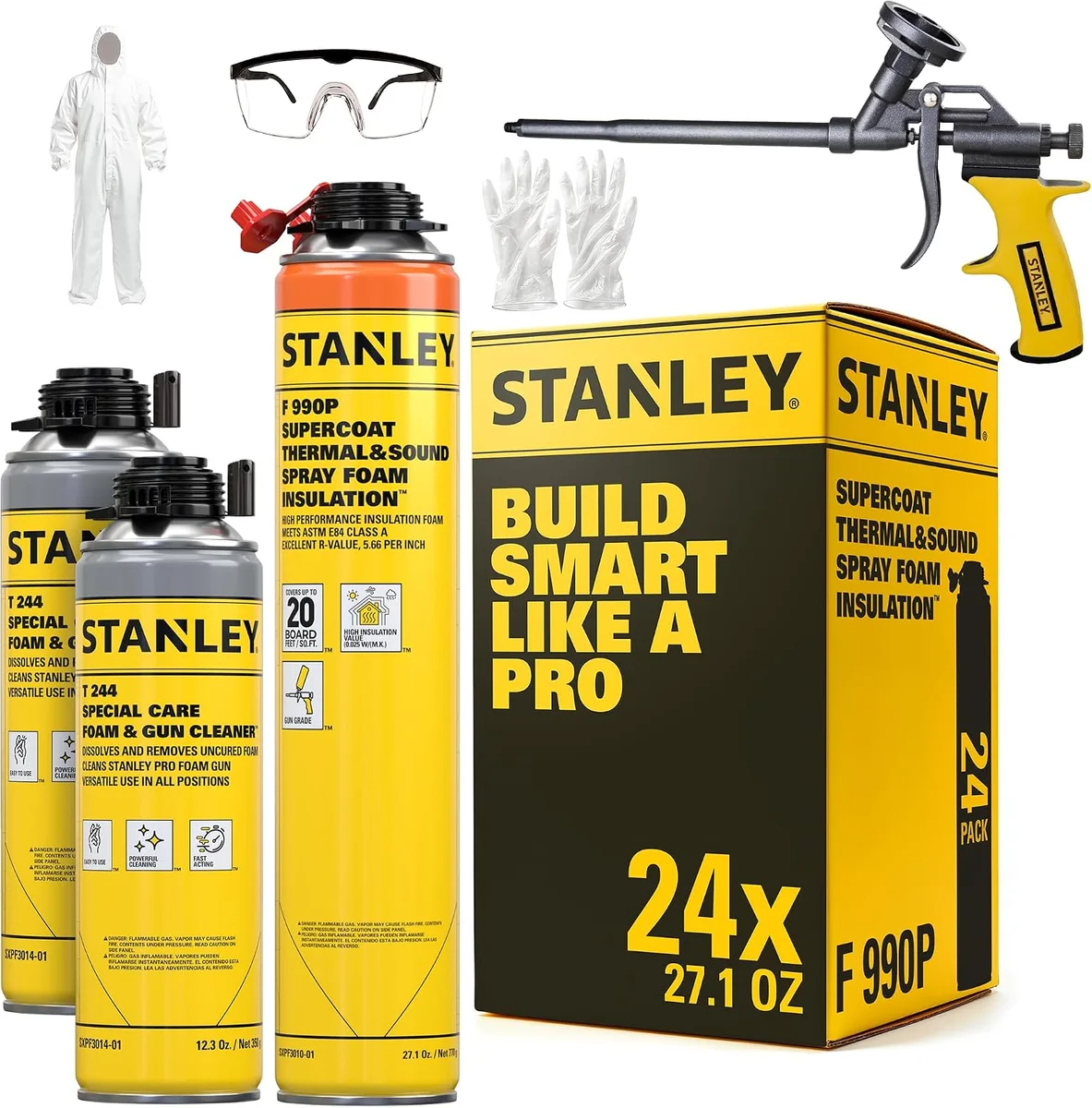
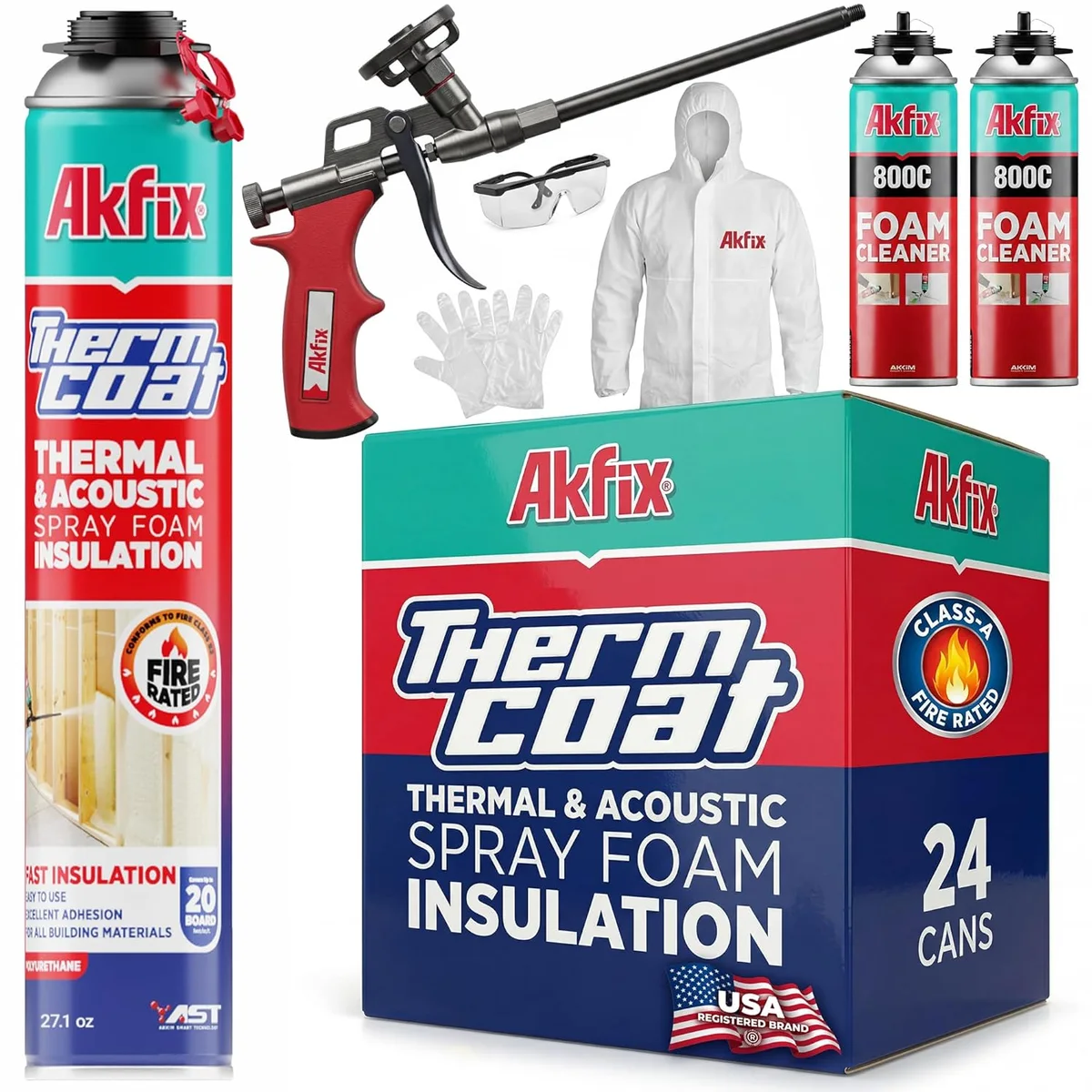
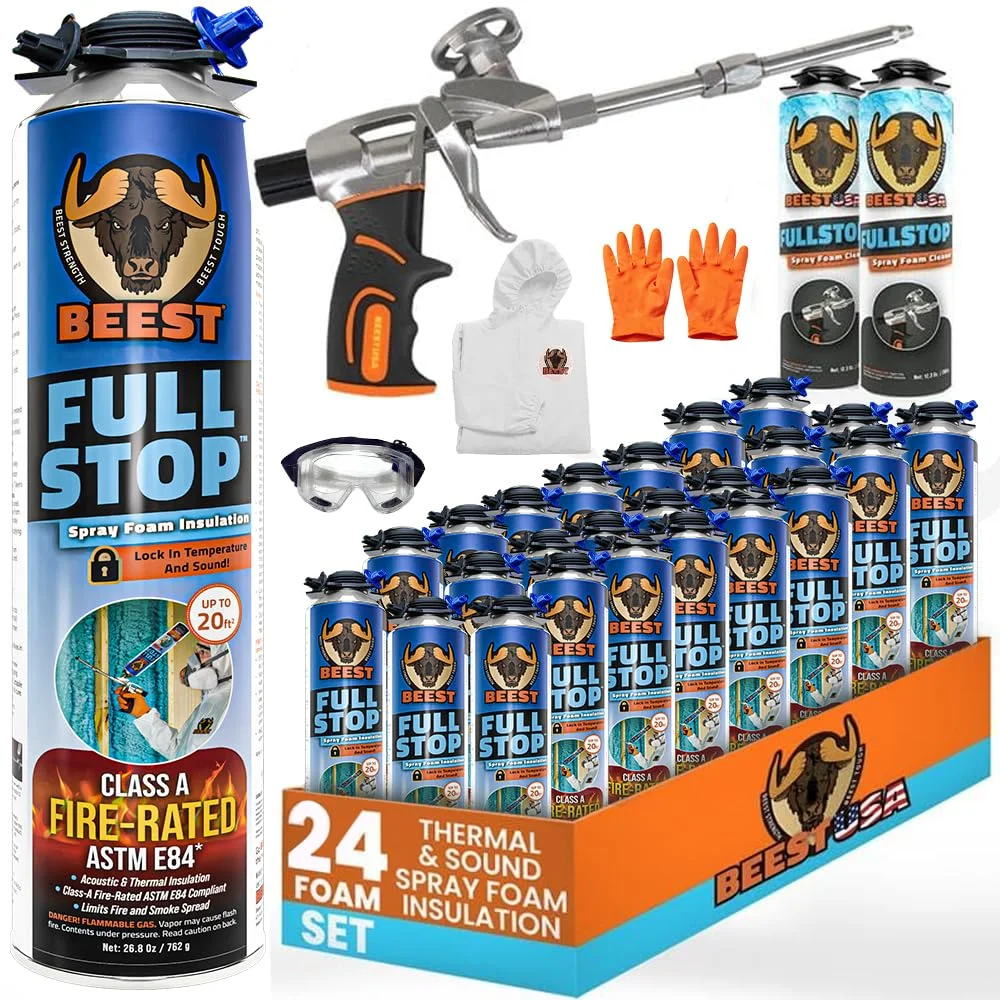
They are different products. A gap-filler can (the Great Stuff style) lays a narrow bead to seal joints, cracks and penetrations - it is not designed to insulate an open wall. A spray foam insulation kit uses a gun to lay a wide, controlled layer across a whole surface for measured R-value. A filler that expands is not automatically insulation, so do not buy a gap filler for a wall.
How many cans of spray foam do I need?
Multiply the area (sq ft) by the thickness (inches) to get board feet, then divide by a can’s coverage - about 20 board feet for a 27 oz closed-cell can. A 200 sq ft wall at 1 inch is about 200 board feet, or roughly 10 cans, before a margin for waste.
How do I calculate spray foam for a roof?
A pitched roof has more surface than the footprint under it. Pick a Roofline surface and choose the pitch: we multiply the footprint by about 1.05 at 4/12, 1.12 at 6/12, up to 1.41 at 12/12, then apply your thickness.
Why should I buy more cans than the raw number?
A per-can coverage figure is the maker’s rated maximum under its stated conditions, and what lands on your surface can be less. The makers of both cans we track suggest planning about 10% extra, so that margin is on by default. It is a planning allowance, not a measured loss rate.
How should I use R-value with this estimate?
Use this calculator for material volume only. For thermal performance, use the exact product’s documented R-value at the intended thickness and stated test basis. Do not create or multiply a per-inch figure unless appropriate product documentation supports it.